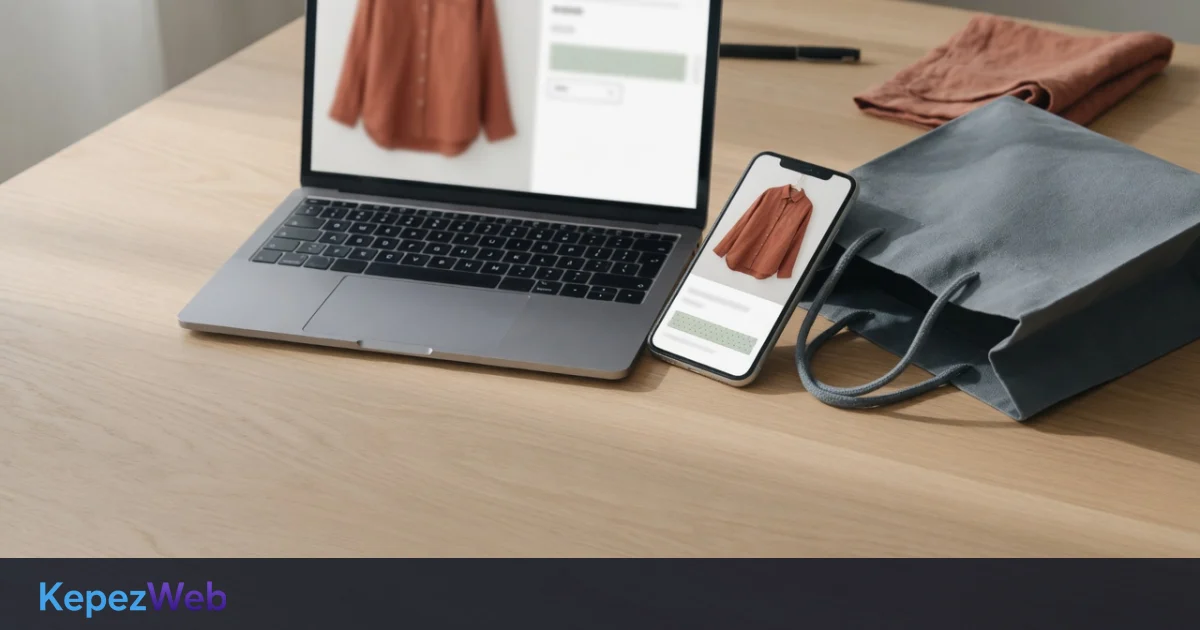
Building an ecommerce website? Our agency guide covers 12 essential areas, including online payments, shipping, product pages, SEO, Turkey’s KVKK and conversion optimisation.
Building an ecommerce website involves coordinating at least 12 essential areas, bringing together the right infrastructure, online payments, shipping integrations and conversion-focused design. A poorly implemented website can lead to lost sales, data-protection risks under Turkey’s KVKK and rising operating costs. This guide explains the key considerations before you start.
Ecommerce Models
- B2C: Selling to consumers, including clothing, cosmetics, food and electronics.
- B2B: Business-to-business wholesale, such as supplying hotels in Antalya.
- D2C (Direct-to-Consumer): Selling directly from the manufacturer to the consumer, without intermediaries.
- C2C: Transactions between individual users, typically through a marketplace.
- Subscription: Subscription-based sales, such as coffee, beauty boxes and SaaS.
Your business model shapes your product pages, payment flow and administration tools. Antalya tourism, villa rental and expat-facing businesses may also need booking and multilingual features.
1. Choosing the Right Platform
| Platform | Advantages | Disadvantages | Best Suited To |
|---|---|---|---|
| Custom PHP/MySQL | Full customisation, scope for scaling and ownership rights subject to contract | Higher initial budget | Medium-to-large brands and bespoke workflows |
| WooCommerce | Flexible, with a broad ecosystem | Plugin overhead and potential performance issues | Small-to-medium businesses |
| OpenCart / PrestaShop | Open source, with straightforward setup | Limited Turkey-specific support | Small businesses |
| Shopify | Quick launch and multilingual options | Monthly fees and customisation constraints | D2C brands and international sales |
| İdeasoft / Ticimax | Turkey-focused platforms with ready-made integrations | SaaS dependency and monthly fees | Small-to-medium businesses |
2. Online Payment Integration
Common online payment providers used in Turkey include:
- Iyzico: Straightforward integration and digital wallet support; verify commission and transaction fees against the provider’s current offer.
- PayTR: Broad bank coverage and instalment options; commission terms vary by business and contract.
- Param POS: A Turkey-based provider with straightforward integration options.
- Bank Payment Gateways: Direct payment gateways from Garanti, İşbank, Akbank and Yapı Kredi. Fees may be competitive, but integration can be more complex.
- Stripe: International sales and multiple currencies, subject to business eligibility and supported countries.
Compare fees, payment experience, authorisation and settlement timing, and reconciliation reporting.
3. Shipping and Logistics
Assess carrier integrations against your delivery needs; a typical setup might compare at least three providers:
- Yurtiçi Kargo, MNG Kargo and Aras Kargo for broad coverage.
- PTT for cost-sensitive shipments and remote destinations.
- Sürat / HepsiJet for marketplace-related delivery options.
Integrate automated label printing, tracking links, returns workflows and batch shipping manifests.
4. Product Page Optimisation
Ten elements that can influence purchasing decisions:
- High-resolution product images from at least five angles, with zoom and 360° views where practical.
- A product demonstration video, where possible.
- Size, colour and model selection through variant management.
- Clear stock availability, with accurate remaining quantities where shown.
- Customer reviews and an average star rating.
- A frequently asked questions section.
- Returns, shipping and warranty information.
- Related products for cross-selling and relevant bundles or upgrades.
- Schema.org Product markup to support eligibility for rich results.
- Social sharing buttons and an “Ask on WhatsApp” button.
5. Cart and Checkout Flow
- A single-page checkout or a clear three-step flow.
- Guest checkout without mandatory account creation.
- Coupon codes and a gift-wrapping option.
- Bank-specific instalment options where available.
- Address autocomplete, with PTT integration where supported.
- A cart-abandonment email sequence, such as two follow-ups, where permitted by applicable consent rules.
6. Inventory and Order Management
Your administration dashboard should clearly show:
- Order statuses: New → Preparing → Shipped → Delivered → Returned.
- Low-stock alerts based on defined thresholds.
- Returns and exchanges workflows.
- Invoicing through Turkey’s e-Arşiv / e-Fatura systems where applicable.
- Reconciliation reports linking the payment provider, bank and shipping carrier.
7. SEO and Structured Data
Ecommerce SEO is often more complex than SEO for a standard business website:
- Product schema covering price, availability, brand, model and average rating.
- BreadcrumbList schema.
- Canonical URLs on category pages, pointing relevant filter variants to the main version.
- Faceted navigation controls to avoid unnecessary indexing.
- Page titles using the product name, brand and model.
- Useful category descriptions; 300 words can be a planning guideline, not an SEO requirement.
- Internal links to related products and product bundles.
8. Mobile Usability and Speed
Mobile and desktop conversion rates vary by product and audience, so it is important to measure the mobile experience separately. Core Web Vitals should be in the green range, and payment steps should work smoothly on mobile devices.
9. Security
- SSL/HTTPS: Across the entire website, especially payment pages.
- PCI DSS: Prefer a compliant provider-hosted payment flow to reduce card-data handling; confirm your own PCI DSS responsibilities.
- OWASP Top 10: Address risks including SQL injection, XSS and CSRF.
- Brute-force and bot protection: reCAPTCHA and rate limiting.
- Regular backups: Daily automated database and file backups.
10. KVKK and Legal Considerations
For ecommerce businesses operating in Turkey, review the following with a qualified adviser:
- A KVKK privacy notice and explicit consent where legally required.
- A distance sales contract presented before order confirmation, where applicable.
- A pre-contract information form, where required.
- Returns and withdrawal rights: a 14-day period may apply, subject to exceptions and current rules.
- Check whether ETBİS registration applies to your store (Turkey’s ecommerce registry); confirm current rules with your accountant.
- Compliance with Turkey’s electronic commerce legislation.
- e-Arşiv invoicing integration where required under current tax rules.
11. Marketplace Integration
Listing products on marketplaces such as Trendyol, Hepsiburada, Amazon Turkey and N11 can broaden your reach. Store management systems such as Logiwa and Logo IBA may support automated product, inventory and order synchronisation; confirm compatibility with your chosen channels.
12. Analytics and Tracking
- GA4 ecommerce tracking: view_item, add_to_cart and purchase events.
- Google Tag Manager.
- Meta Pixel and Conversions API for server-side tracking.
- TikTok Pixel, where relevant to your audience.
- Microsoft Clarity for heatmaps and session recordings, with a free offering.
- Search Console for organic search performance.
- Monthly conversion reporting, with tracking configured around applicable privacy and consent requirements.
Ecommerce Costs in Turkey, 2026
| Project Type | Cost Driver | Schedule Driver |
|---|---|---|
| Ready-made SaaS setup: Shopify / İdeasoft | Platform subscription and setup scope | Catalogue and account readiness |
| WooCommerce with customisation | Theme, plugin and customisation requirements | Customisation and compatibility testing |
| Custom PHP/MySQL ecommerce | Custom development and integration workload | Data flows and acceptance testing |
| Multi-vendor marketplace | Seller management and payment distribution model | Seller scenarios and operational testing |
The KepezWeb Approach
KepezWeb’s ecommerce website development service implements all 12 areas end to end, including online payments, shipping, marketplaces, KVKK, SEO and analytics. We also plan work to develop your sales channels through Google Ads and social media advertising.
Looking for advice on your ecommerce project? Arrange a free discovery call with us in English or Turkish — we can recommend an approach tailored to your catalogue and target market.