Homepage Design: Arrange Sections According to Your Goal
Company information and B2B communication · Further reading
Read the articleEssential cookies keep this site and its forms secure. Analytics and advertising cookies are used only with your consent. Google may send cookieless measurement signals if you decline.
Cookie policy · KVKK (Turkish) · Privacy
EssentialAlways on
Corporate web design gives buyers, partners and prospective employees distinct routes to the information they need, starting with their decision process. From our Kepez–Antalya base, we work remotely with businesses in the UK, US, Ireland and the EU, across Turkey, and with international companies operating in Turkey. Project discussions take place in Turkish or English.

The most important question when commissioning a corporate website comes before deciding how the homepage should look: what information does someone researching your company for the first time need to find before they are ready to speak with you? For a manufacturer, processing capacity and quality certificates may be decisive; for a consultancy, its working method; for a brand with multiple branches, the contact details for the right department. KepezWeb approaches the information structure of a corporate website from these decision points. The aim is not to add the same modules to every company's site, but to make the path to a sales discussion, business partnership or application clear. Corporate content and approvals can be organised remotely for companies throughout Turkey. For UK, US, Ireland, EU and DACH markets, buyers’ information needs guide language planning. We also assess corporate website enquiries from Russia and the CIS, Gulf and Arab countries, and France, Belgium, Switzerland and other Francophone markets using a written scope and approval process. Antalya’s tourism and service sectors form part of this wider experience.
While a procurement specialist investigates a supplier's qualifications, a prospective employee wants to see the team culture. The up-to-date company profile a journalist needs is different from both. A single long About Us page cannot answer all these questions. In the content plan, we define visitor groups, the evidence they need and the responsible company departments separately. This turns the menu into a guide that an outsider can understand, rather than an exact copy of the internal departmental structure.
For example, simply listing the names of its services may not be enough for an engineering services company to explain its activities. It should explain at what stage it becomes involved, which documents it requires from the client and what deliverable completes the work. For a manufacturing company's product groups, technical dimensions, material options and usage limitations take priority. Making this distinction before design begins reduces the risk of producing pages that look attractive but do not answer questions.
Enlarging the logo file or applying the corporate colour to every surface is not enough on its own to establish a digital identity. Heading lengths, text column widths, the context of photographs and button wording are considered together. If a brand guide exists, it serves as the starting point; if not, inconsistencies among the existing visual materials are identified at the beginning of the project. Typeface licensing and publication rights for the photographs used are also discussed as part of the assets the company will supply.
Reading a technical table on a mobile screen is not the same experience as viewing a wide office photograph. Information needs to be placed in the appropriate component: a table for comparisons, short steps for a workflow or a download link with an explanation for a document, for example. We do not regard motion effects as a sign of corporate professionalism. Clear hierarchy and understandable navigation are preferred over animation that makes the reader's task harder.
Before sections such as news, careers and document archives are added, it must be clear who will update them. A news section left empty for months can give visitors a misleading impression of the company's activities. If the human resources team cannot manage vacancies regularly, a controlled application page may be more suitable than a comprehensive portal. Including modules that will not be used in the initial scope increases the management workload without providing additional value to visitors.
The content inventory records each page's owner, review requirements and necessary files. Information such as the expiry date of a quality certificate, the people in a team photograph and contact addresses is verified by the company. Permission must be obtained to use projects as references and display customer logos. Rather than trying to build trust with fabricated success stories or unverified production figures, a more robust approach is to present the available evidence with clear context.
The data needed to assess a B2B enquiry differs from the information involved in consumer shopping. A product group, application, approximate quantity or technical file may be required; however, asking for too much detail at the first contact stage can make submitting an enquiry difficult. We limit form fields to information the sales team actually uses. The reasons for mandatory fields, file upload limits and the department that will receive the enquiry are agreed during the scope discussion.
If a CRM integration is being considered, the existing system's access method, licence terms and field mappings are examined first. It would not be accurate to present every integration as a ready-made feature included without conditions. Similarly, email notifications, enquiry classification and routing to different branches are planned according to need. Compared with our web design approach , this service places greater emphasis on the company’s internal information and approval processes when shaping the design.
An overseas buyer expects technical explanations that are understandable in their own market, not word-for-word translations of terms in a Turkish catalogue. Language planning is based on target customer groups. Page addresses, headings and the language relationships provided to search engines are organised together for each language. We prefer to publish content that has genuinely been prepared rather than duplicate pages with incomplete translations.
Translation terminology should be approved by the company's specialist; shifts in meaning, particularly in engineering and manufacturing texts, can affect commercial discussions. Layout is assessed separately for right-to-left languages such as Arabic. Our project communication is conducted in Turkish and English; publishing content in another language does not mean there is a customer support team in that language. The contact expectations set on your website must also reflect what your business can actually deliver.
Technical search engine optimisation helps ensure that pages are available at accessible addresses, described with appropriate headings and that relationships between content can be understood. Structured data should describe the page's actual content. Adding markup does not guarantee a special appearance, knowledge panel or particular ranking on Google. Branch information must be based on real addresses; duplicate pages with city names added are not evidence of a company's size.
If an old website is being redesigned, working URLs, incoming links and document addresses that are still in use are identified. Redirect decisions during content migration are based on this inventory. To interpret search performance, branded searches, service searches and actual enquiry behaviour should be considered separately. Where more detailed work is needed, the scope of the search engine optimisation service is assessed separately; unlimited content and ongoing optimisation are not assumed to be included in the website design fee.
KepezWeb's office is in the Kepez district of Antalya. For a company in another province, we gather project decisions through online meetings and shared drafts, without pretending to have a physical branch there. If marketing, sales and management approve different aspects within your company, it is important to appoint a single project lead. This person consolidates conflicting feedback on drafts before passing it on for development.
In preparation for launch, form recipients, administrator permissions, content editing training and the scope of maintenance are clarified. The legal accuracy of texts relating to the Turkish Personal Data Protection Law (KVKK) should be assessed by your business's adviser; installing technical tools alone is not proof of regulatory compliance. The schedule and budget are determined after reviewing the available materials and the number of approvals required. For a corporate website consultation, sharing your current website address, visitor groups and the three main problems you want to address helps us define a concrete scope.
The information sought by buyers, business partners and candidates is identified, and gaps in the existing content are mapped out.
Product documents, brand files and publication permissions are collected. A content owner within the company is appointed for each section.
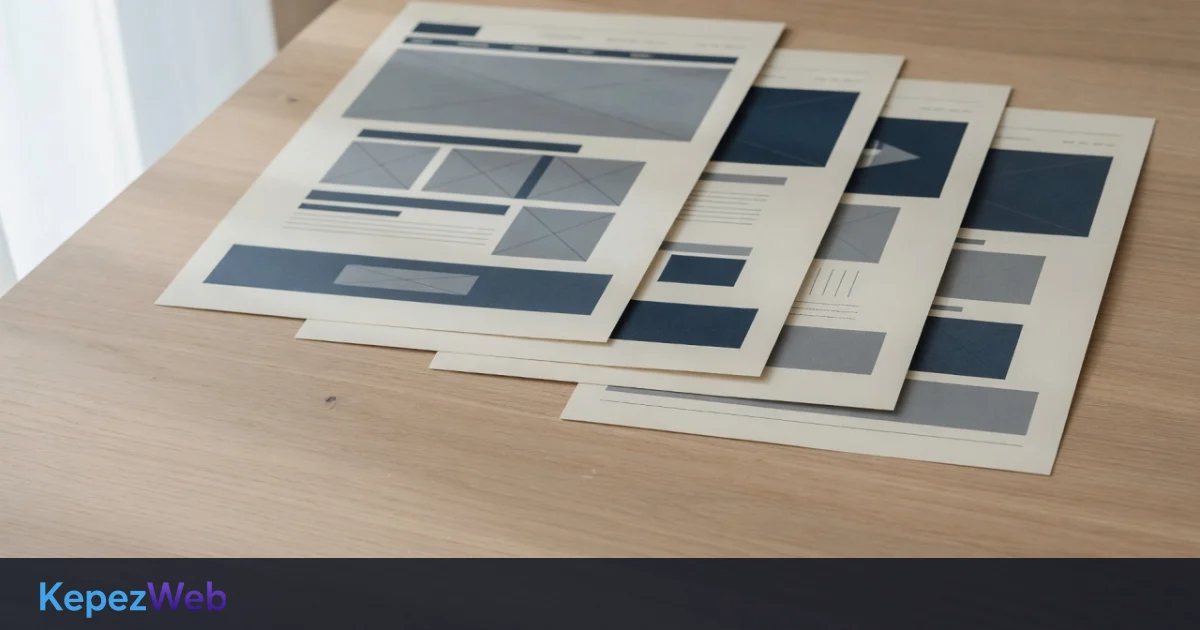
The menu and sample page drafts are assessed using real content; feedback from different departments is consolidated into a single decision.
The approved pages are transferred to a manageable structure. Form routing and any agreed integrations are implemented.
Contact recipients, mobile usability, redirects and content permissions are checked; the company team is shown how to make edits.
A catalogue lists product features. A corporate website connects products with the company's expertise, working methods and the appropriate contact channel. Even with a small number of products, the information visitors need to assess a supplier may need to be presented in a separate, organised structure.
No. We do not add sections you cannot regularly provide content for simply because they appear on large companies' websites. Special sections such as investor documents are included in the scope once publishing responsibilities and actual needs have been established.
The relevant company department assesses the accuracy of each section; a single person in charge consolidates the final decisions within the project. This allows sales product information and human resources job postings to be managed without getting mixed up.
First, a glossary of terms used in the target market should be prepared. A company specialist checks the technical accuracy of the translations. We set up language-specific URLs and page mappings once the content is ready; we do not publish empty language options.
The URLs of existing pages and downloadable documents are inventoried. If the same information is retained, keeping the URL can be considered; an appropriate redirect plan is prepared for changed or merged content. Migration involves more than simply launching a new homepage.
One project lead should collect feedback from sales, human resources and management. Resolving conflicting requests into a single decision prevents the draft from being pulled in different directions at the same time.
Company information and B2B communication · Further reading
Read the article
Company information and B2B communication · Further reading
Read the article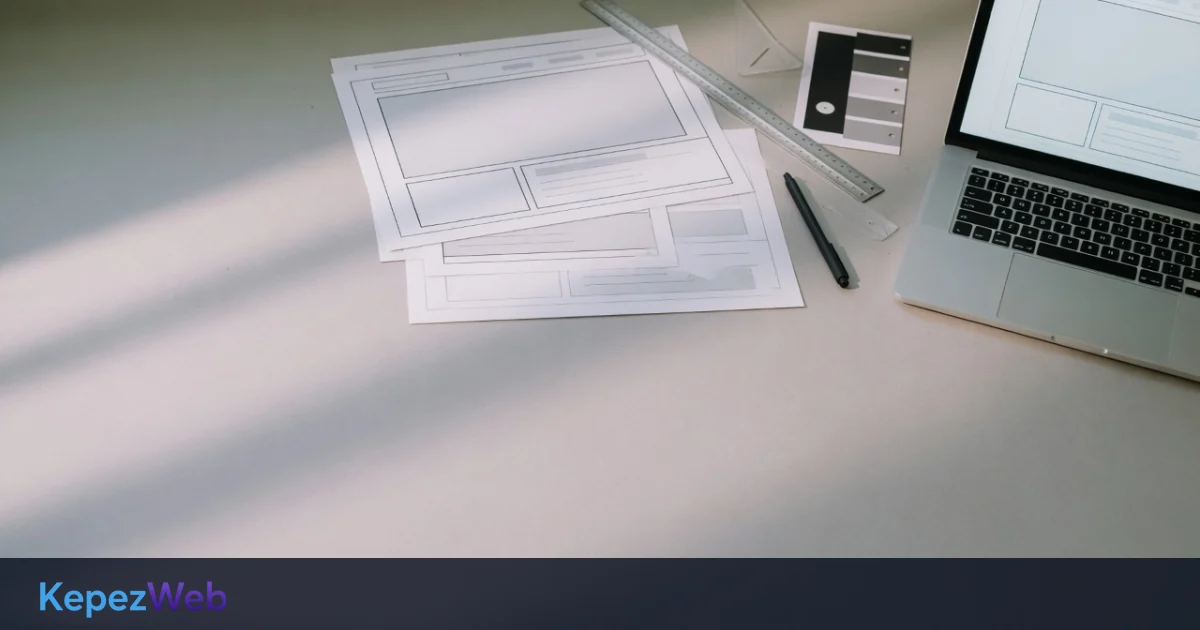
Company information and B2B communication · Further reading
Read the articleLet’s plan a website that fits your business in Antalya, with clear scope and practical next steps.
The AI chat assistant is available in Turkish only.
Replies are generated by AI; do not share personal data. For confirmed information, contact us.