Cart abandonment varies with products and visitor behaviour; measure your own website’s baseline. Eleven practical steps, from faster checkout and transparent shipping costs to trust signals and email reminders, can help reduce this rate.
One of the most painful questions for ecommerce operators is simple: why does a customer fill a cart but not buy? Abandoned carts are an important source of data for examining friction in the purchase journey. This article presents eleven concrete, practical ways to reduce cart abandonment.
What Is Cart Abandonment, and Why Does It Happen?
Cart abandonment rate is the percentage of customers who add products to a cart but leave before completing payment. It varies by sector, device and visit intent. A high value alone does not prove a technical problem; examine checkout drop-offs separately.
Common reasons include:
- Unexpected shipping charges at checkout
- Long or confusing checkout forms
- Unfamiliar or unsuitable payment options
- Slow page loading
- Hidden fees or unclear conditions
- Difficulty checking out on a phone
1. Show Shipping Costs Before Checkout
Unexpected delivery charges can make shoppers reconsider. Help them understand the full cost early:
- Add a delivery estimate to the product page
- Show shipping charges clearly in the cart
- Offer free shipping above a certain amount (e.g. 200 TL+)
- Let customers enter their delivery region to see relevant costs
Transparency makes the total cost easier to understand early; measure its effect on abandonment.
2. Simplify Checkout
A straightforward checkout reduces unnecessary effort. Consider these improvements:
- Remove unnecessary fields and make company details optional where appropriate
- Test a clear single-page or short multi-step flow
- Offer address autocomplete where reliable
- Let shoppers use the same billing and shipping address without retyping it
Keep the initial form short, while collecting the information needed to process and deliver the order.
3. Offer Relevant Payment Options
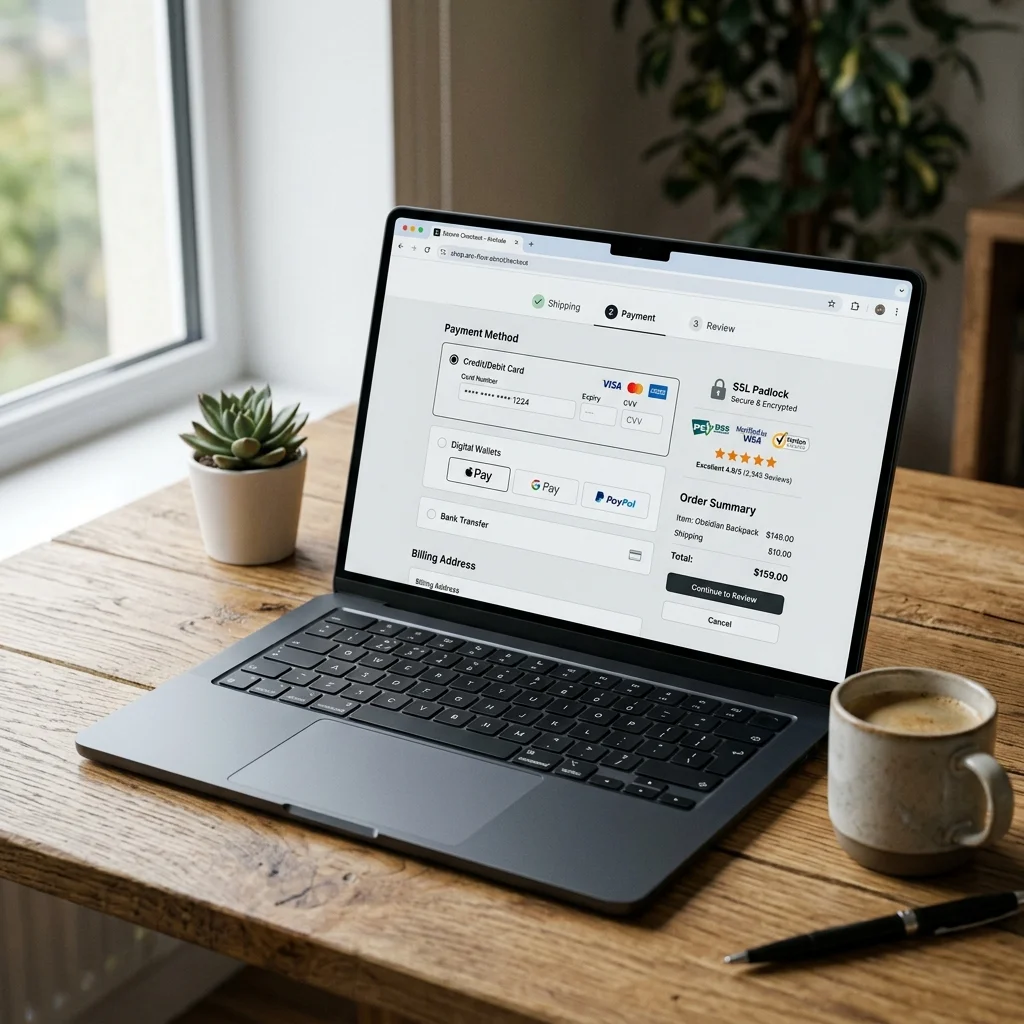
Shoppers may leave if their preferred method is missing. Assess which options your customers and payment provider support:
- Credit and debit cards, such as Visa, Mastercard and AmEx
- Bank transfers where suitable
- Cash on delivery where operationally practical
- Digital wallets, such as Apple Pay or Google Pay, where available
- Instalment options where permitted and supported
Appropriate payment options can make it easier for visitors to use their preferred method.
4. Provide Genuine Trust Signals
Customers need reassurance when sharing payment details. Make useful information easy to find:
- A secure HTTPS connection, without misleading security badges
- Accurate payment security information, such as supported 3D Secure processing
- Genuine customer reviews and ratings
- Your actual refund and returns policy
- Accessible privacy information and terms
- A real customer support phone number or contact option
Genuine, verifiable trust information helps customers understand purchase conditions.
5. Improve Website Speed
Slow pages interrupt the buying process. Apply website speed optimisation to checkout as well as product pages:
- Compress images and use suitable modern formats
- Use a CDN for appropriate public assets
- Defer non-essential JavaScript
- Reduce server response time and monitor it under load
Loading delays can disrupt checkout; measure their effect by device and page step.
6. Make Mobile Checkout Easy
Check mobile traffic share in your own analytics tool. Mobile checkout should work as follows:
- Forms that are easy to complete with one hand
- Large touch targets, such as 48 × 48 pixels
- Fields that remain visible when the on-screen keyboard opens
- Supported mobile wallet options
- Appropriate autofill for phone numbers, email and address details
Compare mobile optimisation’s contribution to completion rates by device.
7. Set Up Abandoned Cart Emails
Even after customers leave, you can bring them back. The timings and discount below are a hypothetical email-flow example; adapt them to your consent and profitability requirements:
- Email 1 (after about an hour): A helpful reminder with a cart link and product image
- Email 2 (after about a day): Useful product details or genuine reviews
- Email 3 (after about two days): A final reminder, with an optional offer if commercially appropriate
Measure cart reminder emails using click, order and cancellation data from recipients who have consented.
8. Use Retargeting Where Appropriate
Google Ads and Meta Ads can reconnect with eligible cart visitors, subject to consent and platform rules:
- Dynamic ads showing relevant products
- A link back to a safely restored cart
- A genuinely time-limited offer, if one exists
- Useful alternative product suggestions
Assess retargeting through additional orders and advertising costs; return visits are not guaranteed.
9. Test Helpful Exit-Intent Messages
If a desktop visitor appears ready to leave, a restrained message may address a concern:
- Trigger it only when the pointer suggests an exit
- Keep the message brief and useful
- Consider a discount only if the economics justify it
- Offer help or a supported alternative payment method
Test this tactic alongside distraction and accessibility risks; it may not improve every website.
10. Clarify Stock and Delivery on Product Pages
Answer practical questions before customers reach checkout:
- State stock availability clearly (show only quantities in actual inventory records)
- Provide a realistic estimated delivery date
- Update the estimate when the delivery region changes
- Make returns and exchange conditions easy to find
Clear information supports confident decisions. Uncertainty can discourage an otherwise interested shopper.
11. Improve Checkout with A/B Testing
Use evidence rather than assumptions:
- Test the order of checkout fields
- Test button labels, such as “Buy Now” and “Place Order”
- Test the placement of genuine trust information
- Test how the discount-code field is presented
Not every test produces a positive result. Findings assessed with sufficient data show which changes should be retained.
Measuring Cart Abandonment
Know your starting point before changing the flow. Track relevant conversion metrics:
| Metric | Calculation | How to Use It |
|---|---|---|
| Cart abandonment rate | (Abandoned carts / Created carts) × 100 | Set according to your own baseline data |
| Checkout completion rate | (Completed orders / Checkout starts) × 100 | Set by device and checkout step |
| Average order value | Total sales / Number of orders | Review alongside margin and conversion rate |
Use Google Analytics 4 or your ecommerce platform’s reporting, checking that events and definitions are consistent.
Frequently Asked Questions
What is a good cart abandonment rate?
It varies by sector. Do not use one rate as a benchmark for all products and visitor groups. What matters is reducing your own website’s rate over time.
How effective are abandoned cart emails?
The effect depends on list quality, consent, message and product demand. Assess clicks, additional orders and unsubscribes together.
Can cash on delivery increase abandonment?
It may help shoppers who do not want to pay online, but uncollected orders and delivery costs can create other losses. Evaluate both checkout completion and successful delivery.
Should I offer a discount at checkout?
Only when it fits your margins and strategy. Automatic discounts for everyone can reduce profit and encourage customers to wait for an offer. Test alternatives such as clearer delivery information or support first.
Conclusion and Next Steps
Reducing ecommerce cart abandonment calls for a broad strategy, from transparent shipping and simpler checkout to trust signals and retargeting. These eleven steps address possible friction points; measure their contribution to conversion on your own website. Every business is different, so use A/B tests to find the solutions best suited to yours. ecommerce website optimisation, contact our team to discuss your store.