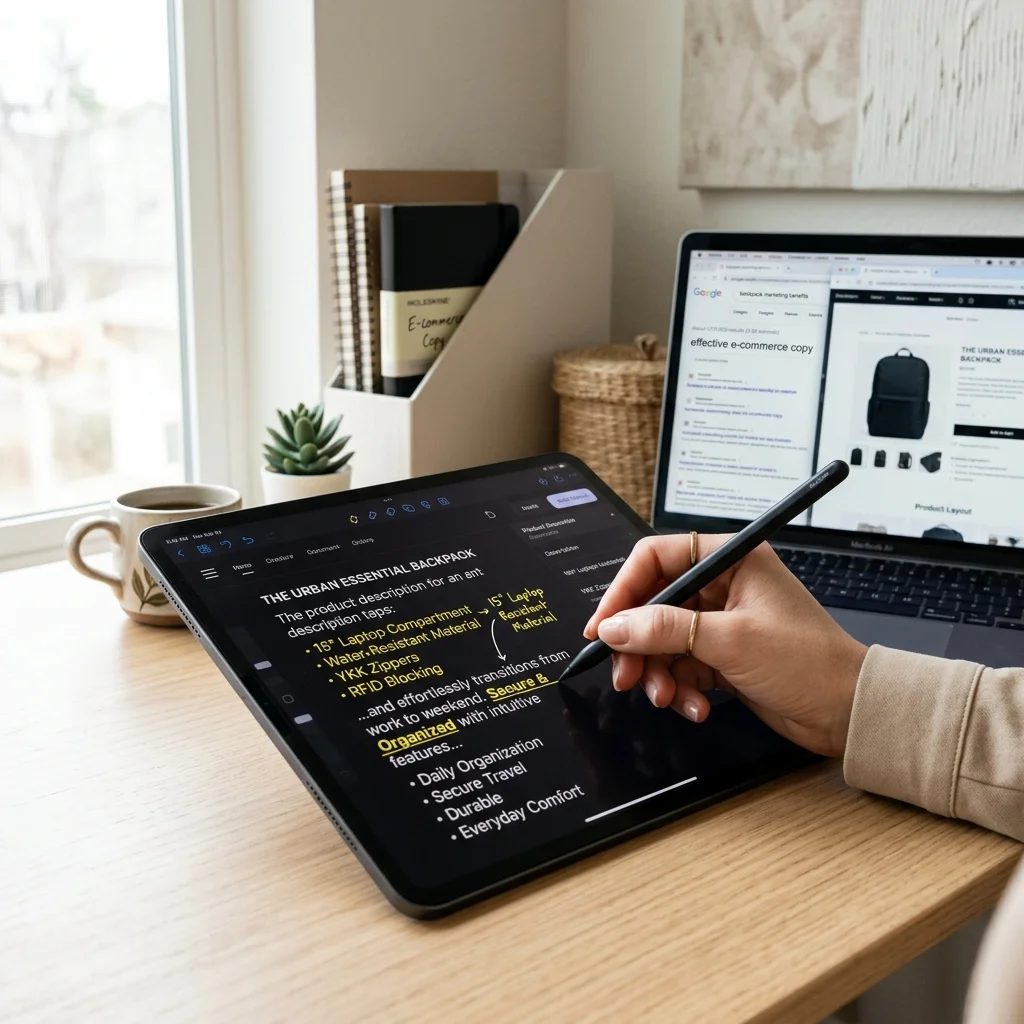
Learn how to write product descriptions that explain benefits, answer customer questions and support search visibility, with nine practical editorial rules.
Learning how to write product descriptions means connecting a product with the buyer’s needs. Clear, useful copy can support search visibility and help visitors make an informed decision. This guide explains nine practical rules for balancing product detail, customer benefits and SEO.
1. Use a Title That Explains the Product and Its Benefit
A title such as “Leather Shoes” gives little context. A buyer may be looking for comfortable, durable footwear for work or everyday use. Include the product type and a relevant benefit without making claims you cannot support.
Weak: Men’s Leather Shoes
More informative: Comfortable Leather Shoes – Designed for Everyday Use
The second title is more specific and includes useful search language. Keep SEO titles concise, often around 60 characters, while recognising that search display length also depends on character width.
2. Explain the Buyer’s Need in the Opening
The first sentences should explain what the product helps someone do, rather than beginning with an unexplained specification list.
Example: a work bag
“This work bag keeps your laptop, documents and everyday essentials organised on the commute. Separate compartments make it easier to find what you need, while its understated design suits office use.”
This opening connects the product with a recognisable routine. Terms such as “work bag” and “laptop” fit naturally, provided the described features are accurate.
3. Distinguish Features from Benefits
Feature: what the product has.
Benefit: why that matters to the customer.
Fictional product copy — Incorrect (Features Only): “500 GSM fabric, polyester blend, water-resistant coating”
Features linked to benefits:
- Feature: Water-resistant coating → Benefit: Indicates fabric density; explain coating and test data separately for water resistance
- Feature: Polyester fabric → Benefit: Explain care and washing conditions using verified product information
- Feature: Ergonomic shoulder strap → Benefit: Aims to support carrying comfort; do not promise personal pain relief or health outcomes
Connect each feature with a real use case, avoiding unsupported claims about waterproofing, lifespan or health benefits.
4. Use Keywords Naturally in Product Descriptions
Use the relevant product search phrase in the opening, a useful h2 heading where appropriate, and the rest of the copy when it reads naturally. There is no required keyword repetition count.
Example: headphones
“These Bluetooth headphones connect wirelessly to compatible phones and computers. Compare battery life, fit and supported audio features to decide whether they suit your commute, work or listening routine.”
“Bluetooth headphones”, “battery life” and related terms describe the product clearly. Write for the buyer rather than adding unrelated SEO phrases to the copy.
5. Use Verified Numbers and Comparisons
Customers trust concrete information. Instead of vague phrases such as “very durable” or “long-lasting”, provide only verified technical figures and test conditions.
Vague: “Long battery life”
Hypothetical technical data example: “48 hours of music playback and 72 hours of standby on one charge” — use these figures only if verified product test data supports them.
Accurate figures help buyers compare options and can naturally match specific searches such as “headphones with 48-hour battery life”.
6. Answer Buying Questions Early
Before purchasing, a customer may ask: “Will it fit?”, “How durable is it?” or “Can I return it?”
Answer these questions in the product description. The stock, warranty and return statements below are fictional copy examples; use them only if they match actual product and sales conditions:
- “Check the size guide or contact us if you are unsure which size to choose.”
- “See the warranty terms for coverage, duration and how to make a claim.”
- “Read our returns policy for eligibility, deadlines and any exclusions.”
Clear answers reduce uncertainty. Do not advertise a warranty, stock level or returns promise that the business does not provide.
7. Make the Description Easy to Scan
Dense paragraphs make useful details hard to find, especially on phones. Help customers scan the page before reading more closely.
Suggested structure:
- Opening: two or three sentences explaining the use case
- Key points: four or five feature-and-benefit bullets
- Specifications: dimensions, weight, materials and available options
- Practical information: warranty, returns and delivery
Use lists and clear sections where they help understanding. Good structure supports usability, but does not guarantee a search ranking improvement.
8. Add Genuine Customer Evidence
Relevant customer feedback can explain how a product performs in everyday use. Publish only authentic reviews and verified figures.
Fictional social proof example; not an actual sales or review record:
“Show the verified average rating and review count here, then summarise recurring feedback about fit, comfort or durability without inventing results.”
Use real numbers from your review system and keep them current. Fabricated sales totals or ratings mislead customers and undermine trust.
9. Review the Description on Mobile and Desktop
Check the finished copy on a phone and a computer. Do headings wrap clearly, lists display correctly and links work with touch and keyboard input?
Google uses the mobile version of content for indexing. A poor mobile experience can also make customers leave before they understand the product.
| Check | Desktop | Mobile |
|---|---|---|
| Title length and wrapping | Readable in full | No clipped text |
| Paragraph width | Comfortable line length | One column without horizontal scrolling |
| Product images | Clear and appropriately sized | Responsive and quick to load |
| Add to Cart button | Visible and usable | Easy to find and tap |
Common Product Description Mistakes
- Unedited supplier copy: Generic text may fail to answer your customers’ questions or distinguish your offer. Duplicate content is not automatically a penalty, but unique, useful detail adds value.
- Unexplained technical language: Explain specifications in terms customers understand without removing information they need.
- Unclear pricing: Keep the current price and any relevant charges visible on the product page.
- Too little useful detail: Write enough to support a decision. Around 150–300 words may suit some products, but length should follow the information needed.
Frequently Asked Questions
How long should a product description be?
There is no universal word count. A straightforward clothing item may need less detail than electronics. Use enough space to explain features, fit, use and practical questions without padding the text.
Can I use HTML in product descriptions?
Yes. Use bold, italics and lists where they aid understanding. Keep heading levels consistent with the page: normally one main H1, followed by appropriate section headings.
Should I add product images?
Absolutely. Text and images together can make product features easier to understand; their conversion contribution varies with the product and image quality. Remember image alt text, for example: “Brown men’s leather shoe, size 42”.
Should the same product have different descriptions in each category?
Not necessarily. A single canonical product page can appear in several categories without needing rewritten copies. If you create distinct pages for genuinely different audiences or uses, make their content useful and manage duplicate URLs appropriately.
Conclusion and Next Steps
Writing product descriptions is a foundation of ecommerce success. Well-structured copy aims to support search visibility and customer decisions; assess its effect through measurement. If you are building an ecommerce website or improving an existing store, request a project quote. KepezWeb can help structure product content around useful information, search intent and conversion goals.